The upcoming era of mobile networking employs similar technologies (like radio waves and towers) as its predecessors, but introduces a distinctive encoding system that yields several benefits. Furthermore, unlike 4G LTE and prior iterations, 5G is heavily reliant on software-defined networking. This allows for the implementation of network slicing, whereby a network is divided into numerous isolated segments to meet specific application requirements. The resulting network architecture renders 5G more adaptable and scalable in comparison to 4G LTE.
The introduction of 5G has several benefits, including enabling a greater number of devices to connect to mobile networks, reducing their power requirements, and offering improved network performance and latency. This facilitates the use of mobile networking for a wider range of devices that were previously unable to utilize it.
One of the most significant impacts expected from 5G is the proliferation of Internet of Things (IoT) devices. These devices typically have limited resources, such as short battery life, and require high-performance network connectivity to communicate with cloud-based servers. However, previous mobile networks could not support numerous IoT devices simultaneously.
With the advent of 5G, IoT devices can now take advantage of mobile network connectivity with faster speeds, lower latency, and reduced power consumption. Furthermore, 5G's design allows for a greater density of connected devices without compromising network connectivity. This means that many IoT devices can be successfully deployed in a single location. As a result, IoT devices can now be deployed widely, even in remote locations where traditional network connectivity options are not available or too expensive.
5G is capable of providing much lower network latencies (1 millisecond) than 4G (200 milliseconds).
Higher Density:
5G is capable of supporting ten times as many connections in the same area as 4G.
Lower Energy Consumption:
5G requires less energy than 4G, which is useful for resource-constrained devices.
Benefits of using 5G security
The use of 5G technology provides organizations with a variety of benefits, however, the following 5G cybersecurity impacts need to be taken into account:
Reduced traffic visibility:
With the increasing relevance of 5G technology in mobile networks, both employees and enterprise devices are expected to increase their use of such networks. However, in case an enterprise lacks a WAN solution such as Secure Access Service Edge (SASE), this could result in a loss of visibility into enterprise traffic.
Increased use of IoT
In the past, IoT devices have been known to have inadequate security measures, leaving organizations vulnerable to potential breaches and increasing their susceptibility to attacks. With the increasing usage of IoT devices, particularly with the advent of 5G technology, it is crucial for organizations to implement effective security solutions to safeguard their devices appropriately.
Supply Chain and Software Vulnerabilities
Due to its reliance on software rather than conventional mobile networking, 5G networks are vulnerable to exploitation, exacerbated by the limited supply chains available.
Building Security for the 5G World
With the increasing prevalence and usability of 5G, businesses are expected to adopt it rapidly. The promise of 5G technology makes it an attractive option for organizations that need to deploy monitoring and control solutions in remote locations. However, critical infrastructure, healthcare, and other similar industries that require such solutions are also highly targeted and vulnerable to cyber threats.
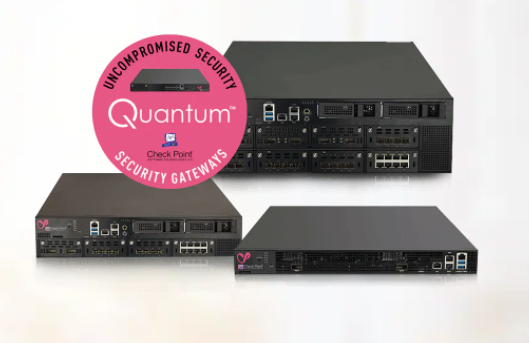
Check Point offers secure solutions for these organizations to deploy IoT and other devices on 5G networks. Their IoT security solutions are tailored to meet industry-specific requirements and capable of safeguarding IoT devices from initial network connections to thwarting known and zero-day attacks. To discover more about Check Point’s IoT security solutions, request a demo.
Next Generation Firewalls
Highest Catch Rate
IoT Security
Advanced Network Threat Prevention
Contact us right now and receive information about our products and services.
Protect your company and let's start working together.